
Applications

Tap-water

In high-rise residential buildings, commercial complexes, and industrial campuses, secondary water supply systems — rooftop tanks, underground reservoirs, and booster pump stations — represent the final link between the municipal main and the consumer's tap. Water quality can degrade significantly at this stage if left unmonitored.


Linksens compact, low-maintenance sensors enable building operators and property managers to maintain continuous visibility of water quality at secondary supply points, ensuring occupants receive safe, compliant water around the clock.

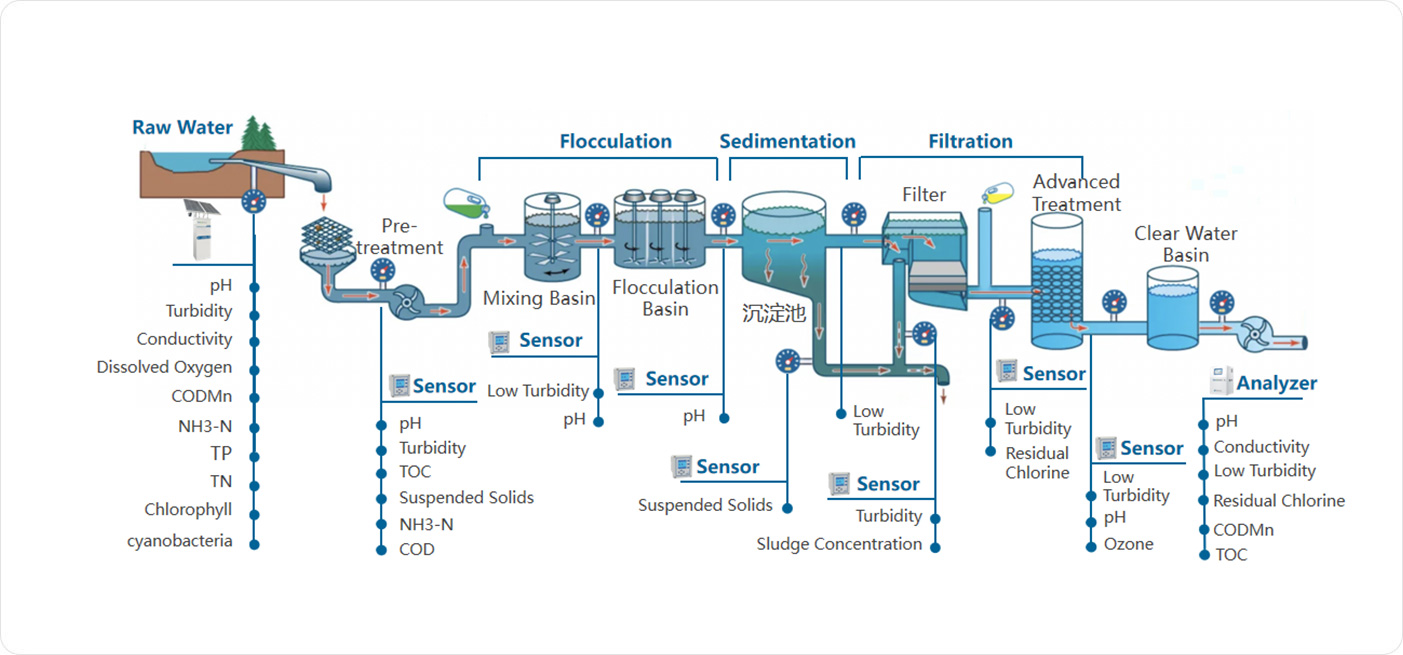
Tap Water & Secondary Water Supply Quality Monitoring
【Secondary Water Supply Monitoring Challenges】

• Stagnation in storage tanks promotes bacterial regrowth, including Legionella, when residual chlorine drops below safe levels

• Contamination events in building water systems can affect large numbers of occupants before detection

• Regulatory requirements for secondary water supply monitoring are tightening in many countries

• Maintenance access to rooftop tanks and underground reservoirs is limited — sensors must operate reliably for months between service visits

• Multiple monitoring points across a large building or campus require networked sensors with centralized data collection


【Key Parameters for Secondary Water Supply】

Parameter

Target Range

Why It Matters

Residual Chlorine

> 0.05 mg/L (minimum)

Disinfection maintenance; Legionella prevention

pH

6.5 – 8.5

Regulatory compliance; pipe corrosion control

Turbidity

< 1 NTU

Sediment accumulation and contamination indicator

Conductivity / TDS

< 1,000 µS/cm

Source quality verification and contamination screening

Temperature

< 20°C (cold supply)

Legionella growth risk assessment


1

LINKSENS SOLUTION
【Recommended Linksens Products】

Product Model

Measured Parameters

Best For

Digital Residual Chlorine Sensor

Free Chlorine, Temperature

Storage tank and distribution point chlorine monitoring

S-pH001 pH Sensor

pH, Temperature

Compact tank or pipe installation; low maintenance

S-TUR032 Turbidity Sensor

Turbidity, Temperature

Sediment and filter performance monitoring

S-EC022 Conductivity Sensor

EC, TDS, Temperature

Contamination screening at tank inlet and outlet

Multi-Parameter Controller

Multiple parameters

Centralized display and data logging for multi-point systems

Frequently Asked Questions
【FAQ】

Q: What residual chlorine level should be maintained in secondary supply tanks?

A: WHO guidelines recommend a minimum free chlorine residual of 0.2 mg/L at the point of use. In secondary supply systems with long residence times, maintaining 0.3–0.5 mg/L at the tank outlet is advisable to ensure adequate residual reaches distal taps. Levels below 0.05 mg/L should trigger an immediate investigation and corrective action.


Q: How can sensors be networked across multiple monitoring points in a building?

A: All Linksens sensors use RS-485 Modbus RTU, which supports multi-drop bus topology — up to 32 sensors on a single 2-wire cable run. This connects to a building management system (BMS) or IoT gateway for centralized monitoring and alerting, with no need for individual sensor power supplies at each monitoring point.

Product recommendations

Have Questions About This Industry? We Have Answers!

Contact us for tech support, service, sales, or to get a quote.

×

Please leave message to get a quotation and solution

VerifyCode *
*reguired fields