Applications

Industrial sector

Industrial operations generate some of the most challenging water quality monitoring environments: extreme pH, high temperatures, aggressive chemicals, heavy suspended solids, and media that would destroy standard electrodes within weeks. At the same time, industrial facilities face discharge permit compliance obligations, process water quality requirements, and corporate sustainability targets.


Linksens industrial sensors are engineered for durability in these demanding conditions — with specialized probe options for hydrofluoric acid, high-temperature steam condensate, ultra-pure process water, and flue gas desulfurization (FGD) slurries.


Industrial Wastewater & Process Water Quality Monitoring
【Industrial Water Quality Monitoring Applications】

• Process water pH, conductivity, and DO control in chemical, pharmaceutical, and food & beverage manufacturing

• Cooling water monitoring — pH, conductivity, and ORP control to prevent scaling, corrosion, and biological fouling

• Boiler feedwater purity monitoring — ultra-pure water pH and conductivity measurement

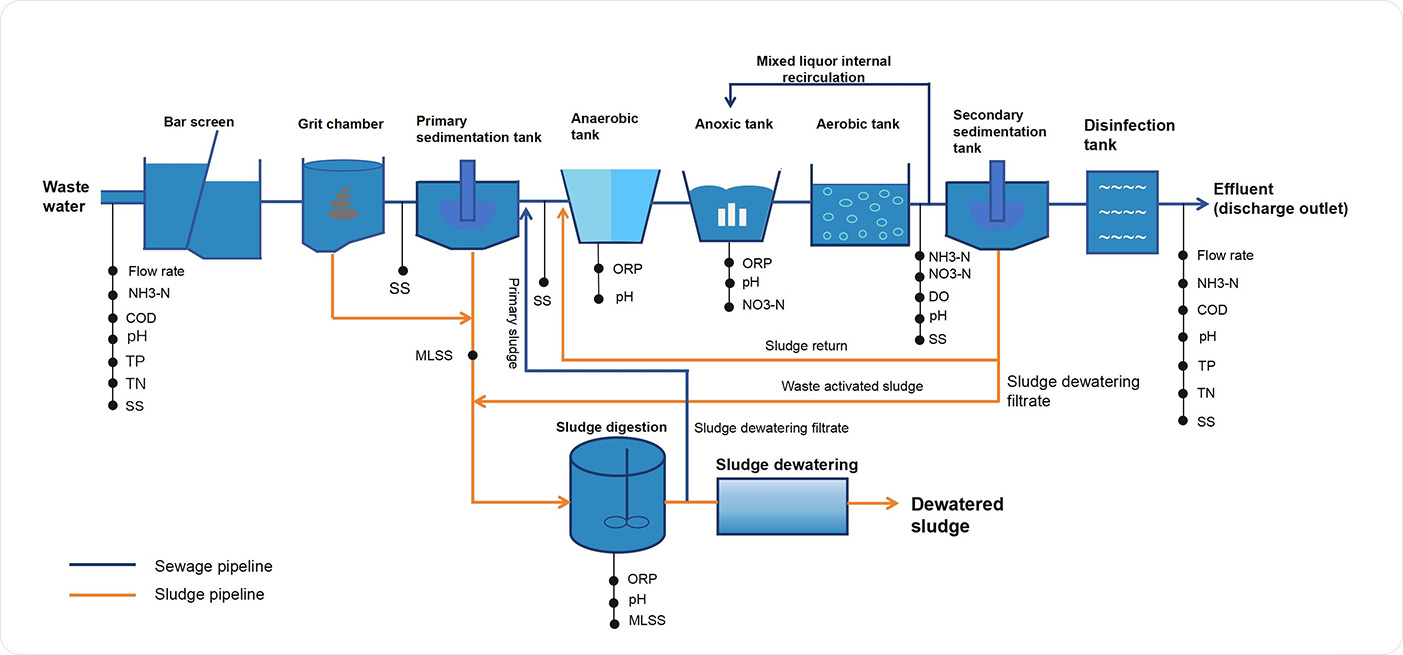
• Industrial wastewater pre-treatment and effluent discharge compliance monitoring

• Flue gas desulfurization (FGD) slurry pH control in coal-fired power plants

• Electroplating bath monitoring — pH and conductivity control for product quality

• Semiconductor and electronics manufacturing — ultra-pure water quality assurance


【Key Parameters for Industrial Applications】


Parameter

Target Range

Why It Matters

pH

Process-specific (0–14 range)

Process control; corrosion protection; discharge compliance

ORP

Process-specific

Oxidation/reduction reaction control; chrome reduction; disinfection

Conductivity / TDS

< 0.1 µS/cm (pure water) to > 10,000 µS/cm

Process water purity; cooling water treatment effectiveness

Dissolved Oxygen

< 0.01 mg/L (boiler feedwater)

Boiler corrosion protection; fermentation process control

COD

Permit-specific discharge limit

Effluent compliance monitoring

Suspended Solids

Process-specific

Slurry concentration; filter performance; sludge balance

Temperature

0 – 85°C (sensor range)

Process control; compensation reference for all parameters


1

【Specialized Probe Selection Guide for S-pH002】
  • S-pH002 supports 8 industrial probe types — select by your process medium


Product Model

Measured Parameters

Best For

Standard Glass Electrode

Municipal wastewater, general process water

General-purpose; most cost-effective option

Ultra-Pure Water Probe

Semiconductor fab, power generation, pharma

Stable measurement in low-conductivity media

High-Temperature Probe

Steam condensate, sterilization, > 60°C media

Rated for high-temperature process streams

Low-Temperature Probe

Cold-chain, refrigerated process water

Accurate at near-freezing temperatures

HF-Resistant Probe

Semiconductor fab, glass etching, fluoride media

Resistant to hydrofluoric acid degradation

FGD/SCR Probe

Power plant flue gas scrubbing slurries

Robust in highly abrasive, corrosive FGD media

High-Temp Pure Water Probe

Boiler feedwater, power plant condensate

Combined high-temperature + high-purity capability


Frequently Asked Questions
【you may ask:】

Q: What probe type should I use for boiler feedwater pH monitoring?

A: Boiler feedwater is ultra-pure (very low conductivity), causing standard glass electrodes to give unstable, drifting readings due to liquid junction potential issues. The S-pH002 high-temperature pure water probe is designed for this application, providing stable pH measurement in both high-purity and high-temperature conditions simultaneously.


Q: Can you supply sensors for ATEX or explosion-proof environments?

A: Standard Linksens sensors are not ATEX-certified. For explosion-proof installations, please contact our sales team — we can advise on appropriate sensor housing configurations and third-party certified enclosure solutions for your site hazardous area classification.


Q: How does UV254 optical COD monitoring compare to wet-chemistry COD analyzers for industrial effluent?

A: UV254 optical COD sensors offer continuous, reagent-free measurement with zero chemical waste — making them ideal for trend monitoring and process control at influent and pre-treatment stages. For final effluent compliance reporting where regulatory agencies require method-specific analysis, wet-chemistry analyzers remain the reference method. Many industrial facilities use both: optical sensors for real-time process control and wet-chemistry analyzers for permit reporting.


Tell us your process conditions — our engineers will specify the right probe type and sensor configuration for your industry.

→  sales@linksens-hk.com  |  www.linksens-hk.com


Product recommendations

Have Questions About This Industry? We Have Answers!

Contact us for tech support, service, sales, or to get a quote.

×

Please leave message to get a quotation and solution

VerifyCode *
*reguired fields