Applications

Aquaculture

The aquaculture industry is under unprecedented pressure: population growth demands more aquatic protein, while tightening environmental regulations mandate stricter discharge compliance and sustainable practices. Our intelligent water quality monitoring solutions deliver real-time, reliable data across the entire aquaculture production chain — from hatchery to grow-out ponds to effluent discharge — enabling farmers to optimize feeding efficiency, prevent costly disease outbreaks, reduce mortality rates, and maintain full regulatory compliance even under the most challenging environmental conditions.
Application in Aquaculture Scenarios
【Why Aquaculture Needs Intelligent Monitoring】
Water quality is the single most critical factor determining aquaculture success. Even minor fluctuations in key parameters can trigger cascading effects — suppressed feeding, compromised immunity, disease outbreaks, and ultimately mass mortality events. Traditional periodic manual sampling simply cannot capture the rapid, often unpredictable changes that occur in dynamic aquaculture environments, leaving farmers operating blindly between testing intervals.
【The monitoring requirements span the entire production cycle】
  • Hatchery:Temperature stability, dissolved oxygen (DO), ammonia control for larval survival

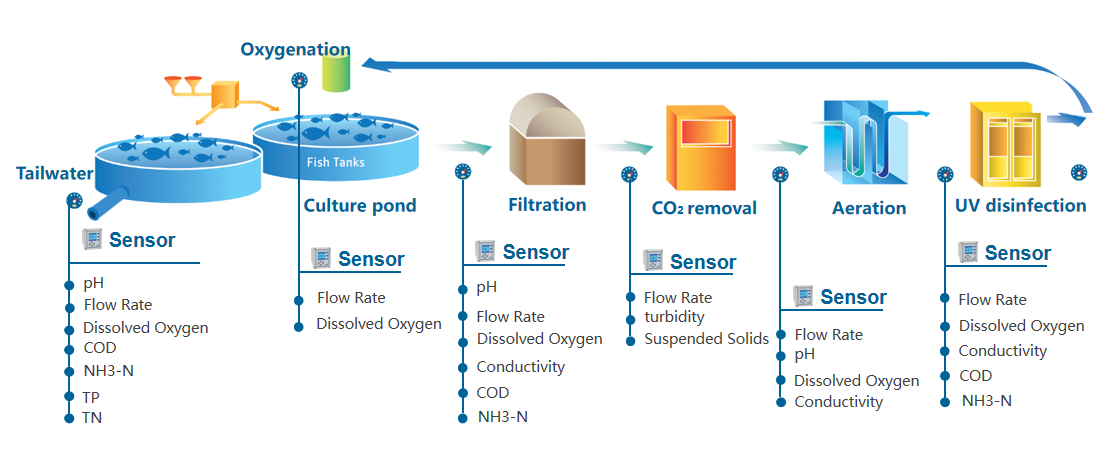
  • Grow-out ponds/RAS systems :Continuous DO, pH, temperature, ammonia, nitrite monitoring for growth optimization

  • Feeding management: Real-time DO response to adjust feeding rates, preventing feed waste

  • Effluent discharge: COD, ammonia, total phosphorus, suspended solids monitoring for regulatory compliance

【The Linksens Solution】

Linksens provides a comprehensive range of water quality sensors and monitoring systems specifically engineered for demanding aquaculture environments—from hatchery tanks to grow-out ponds to recirculating aquaculture systems (RAS).

Our instruments deliver continuous, accurate data that enables farmers to:

  • Reduce mortality — Immediate alerts when parameters move outside safe zones

  • Lower feed costs — Optimize feeding based on real-time DO and activity levels

  • Improve FCR — Maintain ideal dissolved oxygen for maximum feed conversion efficiency

  • Meet regulations — Document effluent quality and ensure compliance

  • Operate remotely — Monitor multiple ponds or tanks from a single dashboard

【Key Parameters We Monitor】
Parameter Why It Matters
Dissolved Oxygen (DO) The most critical parameter. Low DO stops feeding, increases FCR, and kills stock rapidly.
Ammonia (NH₄⁺) Toxic even at low concentrations; accumulates quickly in high-density systems.
Nitrite (NO₂⁻) Damages gill function and reduces oxygen uptake in blood.
pH Affects toxicity of ammonia and availability of nutrients; drastic shifts stress fish.
Temperature Directly controls metabolic rate, feeding activity, and disease risk.
【Applications】

Grow-Out Ponds

Continuous monitoring of DO, pH, temperature, and ammonia helps optimize aeration schedules, adjust feeding rates, and prevent health issues before they impact production.

Recirculating Aquaculture Systems (RAS)

In closed-loop RAS systems where water is continuously recycled, monitoring is especially critical. Linksens sensors provide the real-time data needed to maintain biofilter performance, control organic loads via COD measurement, and avoid toxic ammonia build-up.

Hatcheries & Nurseries

Larval and juvenile stages are highly sensitive to water quality changes. Continuous monitoring of temperature, DO, pH, and ammonia ensures stable conditions that maximize survival rates and healthy development.

Effluent Discharge

Meeting tightening local and national discharge standards is a legal requirement for aquaculture operations. Linksens monitoring solutions help farms document COD, ammonia, TSS, and pH levels, providing reliable data for regulatory compliance.

【Why Choose Linksens for Aquaculture】
  • Tailored for aquaculture:Our sensors are specifically designed for the challenging conditions of fish and shrimp farming, including biofouling, electrical noise, and continuous submersion.

  • Low maintenance, high uptime:Optical and ISE technologies eliminate frequent calibration, membrane replacement, and consumable costs.

  • One-stop solution:From single sensors to complete multi-parameter monitoring systems, we provide everything needed for effective aquaculture water quality management.

  • Seamless integration:Standard RS-485 output with Modbus RTU protocol connects directly to SCADA, PLC, IoT systems, or cloud platforms.

  • Built to last:IP68-rated, corrosion-resistant materials, and robust electronics ensure reliable operation in harsh environments.

  • Global support:Backed by responsive technical support and application expertise for customers worldwide.

Have Questions About This Industry? We Have Answers!

Contact us for tech support, service, sales, or to get a quote.

×

Please leave message to get a quotation and solution

VerifyCode *
*reguired fields